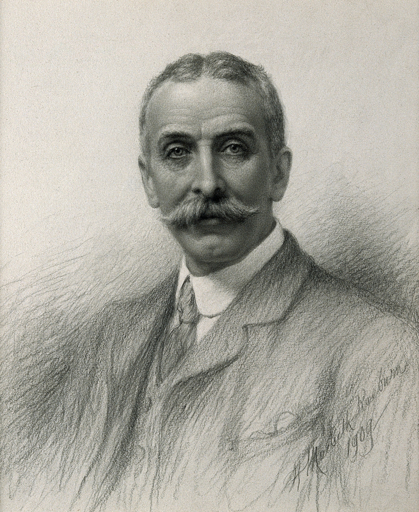
Pencil portrait of Edward Law by Henry Macbeth-Raeburn, 1909
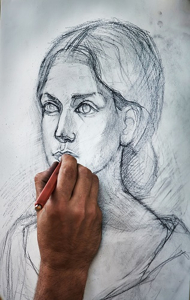
Drawing as a visual art form is the act of producing images on a two-dimensional surface by making marks, most often with instruments like pencils, ink, charcoal, chalk, or crayon. The surface is usually paper, but it can also include materials such as cardboard, vellum, wood, plastic, canvas, or even digital screens using styluses and graphic tablets.
Core characteristics of drawing as a visual art form:
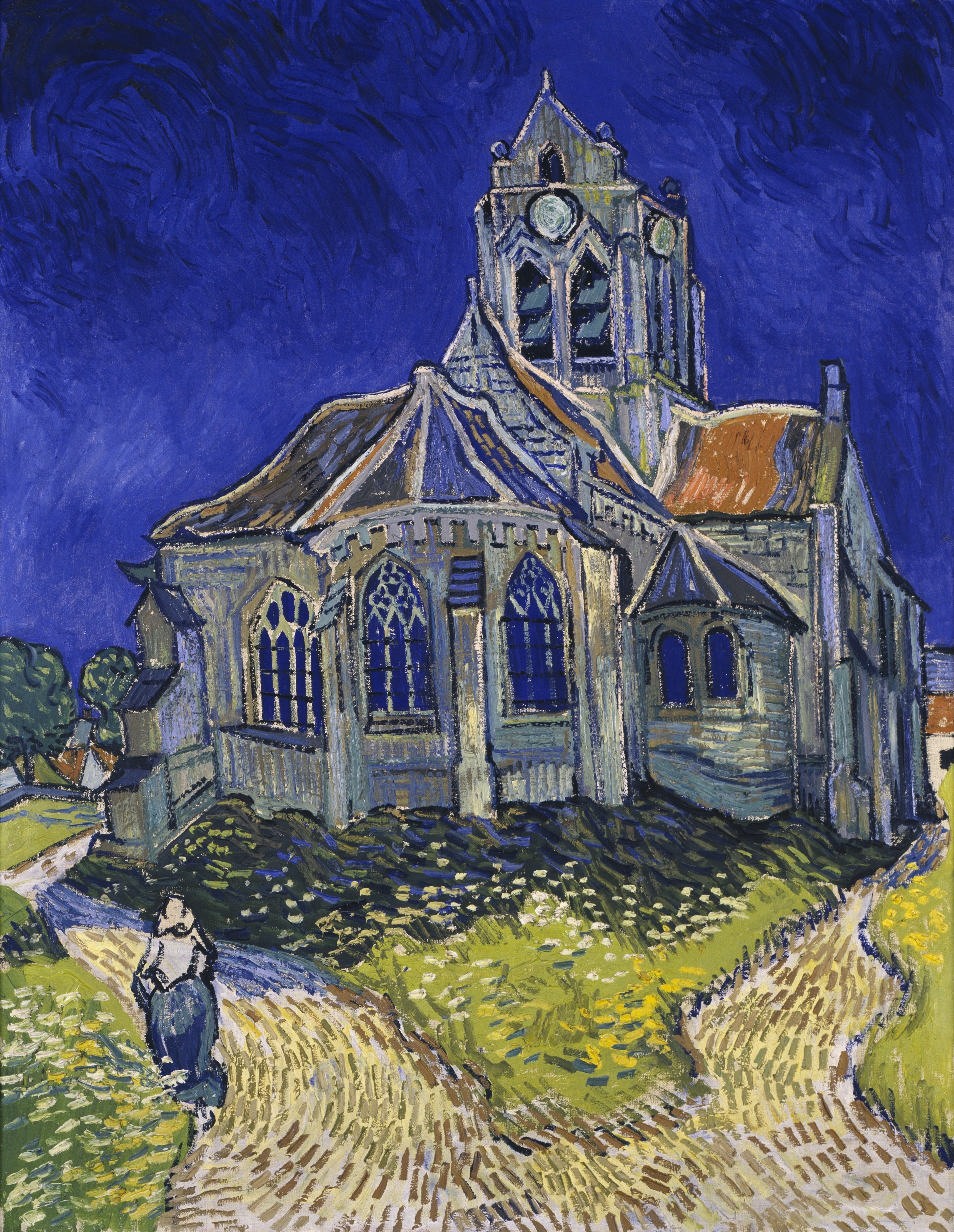
- Linear Emphasis: Drawing is primarily concerned with the use of lines and the careful control of marks to create representations, forms, or expressive compositions. Unlike painting, drawing traditionally focuses more on form and shape, rather than color and mass.
- Range of Purposes: Drawing serves multiple roles:
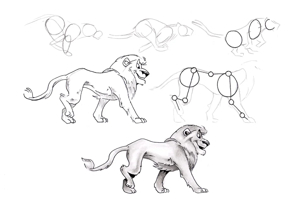
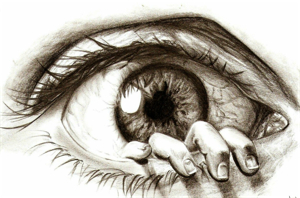
- Techniques and Methods: Artists employ a variety of techniques including line drawing, shading, cross-hatching, stippling, and more. Drawings can be realistic, abstract, or entirely expressive. They may be created quickly as rough sketches or developed into highly detailed, finished works.
- Expressive Power: Drawing is valued for its immediacy and personal expression. The direct relationship between hand, tool, and surface allows artists to communicate ideas, emotions, and visual observations with unique spontaneity and individuality.
- Historical Importance: Drawing is among the oldest forms of human expression, dating back to prehistoric cave art, and remains a foundational discipline for artistic practice in Western and global art traditions.
- Elements: Core elements of drawing include line, shape, value (light and shadow), texture, and composition. These elements allow artists to depict form, depth, and motion.
- Accessibility: Drawing is the most fundamental and accessible form of visual art — requiring only a tool and a surface. This simplicity makes it a universal part of art education and practice.
In essence, drawing is the act of making visible marks to depict, explore, or express ideas, observations, or emotions on a flat surface. Its unique blend of directness, versatility, and expressive potential makes drawing one of the most significant pillars of the visual arts.
Related
How does drawing serve as a foundation for other visual arts
What are the main tools used in traditional versus digital drawing
Why is linearity important in defining drawing as an art form
How has the history of drawing influenced modern artistic practices
In what ways can drawing be used to communicate complex ideas